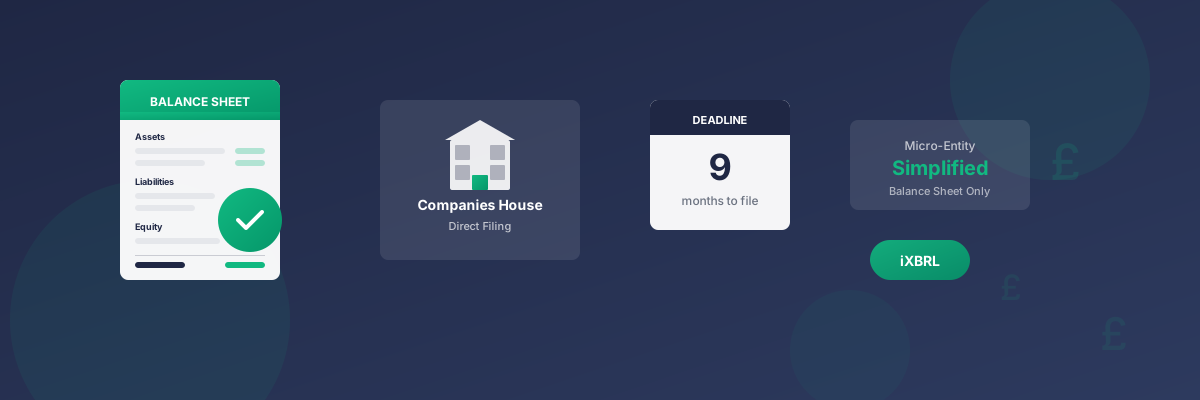
Every UK limited company must file annual accounts with Companies House, regardless of size or trading activity. This comprehensive guide covers everything you need to know about preparing and submitting your company accounts.
What Are Company Accounts?
Company accounts are financial statements that show your company's financial position at the end of each accounting period. They provide a snapshot of what your company owns, owes, and how it performed during the year.
Unlike management accounts used internally, statutory accounts follow strict formatting rules and must be filed publicly with Companies House.
Who Needs to File?
All UK limited companies registered with Companies House must file accounts, including:
- Trading companies - Actively conducting business
- Dormant companies - Not trading but still registered
- Holding companies - Owning shares in subsidiaries
- Property companies - Generating rental income
- Single-director companies - Including contractor limited companies
Types of Company Accounts
The accounts you file depend on your company's size. Most small businesses qualify as micro-entities or small companies.
Micro-Entity Accounts
You qualify as a micro-entity if you meet two of these three criteria:
- Turnover of £1 million or less
- Balance sheet total of £500,000 or less
- 10 employees or fewer
- Abbreviated balance sheet only
- No profit and loss account required publicly
- Minimal notes to accounts
- No directors' report required
Small Company Accounts
You qualify as a small company if you meet two of these three criteria:
- Turnover of £15 million or less
- Balance sheet total of £7.5 million or less
- 50 employees or fewer
- Full balance sheet
- Profit and loss account (can be abbreviated)
- Notes to accounts
- Directors' report
Dormant Company Accounts
Dormant companies file simplified accounts showing:
- Balance sheet (often just share capital)
- Statement that the company was dormant
- No profit and loss required
What's Included in Company Accounts?
Balance Sheet
The balance sheet shows your company's financial position at year end:
- Fixed assets - Equipment, vehicles, property
- Current assets - Cash, debtors, stock
- Liabilities - Creditors, loans, tax owed
- Share capital and reserves - Invested capital and retained profits
Profit and Loss Account
For small companies (not micro-entities filing publicly), this shows:
- Turnover (revenue)
- Cost of sales
- Gross profit
- Administrative expenses
- Operating profit
- Tax
- Net profit/loss
Notes to Accounts
Supporting information explaining:
- Accounting policies used
- Breakdown of key figures
- Director transactions
- Staff costs (if applicable)
Filing Deadlines
Company accounts must be filed within:
- 9 months of the accounting period end for private companies
- 6 months for public companies (PLCs)
First Year Filing
New companies have a longer first accounting period - up to 18 months from incorporation. However, accounts must still be filed within 21 months of incorporation or 9 months from the accounting reference date, whichever is earlier.
Late Filing Penalties
Companies House automatically issues penalties for late filing:
| Time Late | Private Company | Public Company |
|---|---|---|
| Up to 1 month | £150 | £750 |
| 1-3 months | £375 | £1,500 |
| 3-6 months | £750 | £3,000 |
| Over 6 months | £1,500 | £7,500 |
iXBRL Format Requirements
All company accounts filed online must be in iXBRL (Inline eXtensible Business Reporting Language) format. This is a machine-readable format that allows Companies House to process accounts automatically.
You cannot create iXBRL files manually - you need software that generates them. Options include:
- Filing software like TinyTax (generates iXBRL automatically)
- Accountancy software with Companies House integration
- Professional accountants who file on your behalf
How to File Company Accounts
Option 1: Online Software
The easiest method for most small companies. Software like TinyTax:
- Guides you through entering your figures
- Generates compliant iXBRL accounts
- Submits directly to Companies House
- Provides instant confirmation
Option 2: Through an Accountant
Accountants prepare and file accounts using professional software. This is recommended if:
- Your accounts are complex
- You have multiple subsidiaries
- You need audit or assurance services
- You're unsure about accounting treatments
Option 3: Companies House WebFiling
Companies House offers free online filing for:
- Dormant company accounts
- Micro-entity accounts (limited functionality)
Filing Accounts and CT600 Together
Many companies file their Companies House accounts at the same time as their HMRC corporation tax return (CT600). While these are separate filings to different organisations:
- Both are based on the same accounting period
- Both use similar underlying figures
- Software like TinyTax handles both from one set of data
Common Mistakes to Avoid
1. Missing the Deadline
Set calendar reminders well before the 9-month deadline. Penalties are automatic and non-negotiable.
2. Wrong Accounting Period
Ensure your accounts cover the correct period. New companies often confuse their first accounting reference date.
3. Balance Sheet Doesn't Balance
Double-check that assets equal liabilities plus equity. Software handles this automatically.
4. Incorrect Company Size Classification
Using micro-entity format when you should use small company format (or vice versa) can cause rejection.
5. Missing Authentication
Accounts must be authenticated by a director. Software handles this during submission.
Dormant Company Accounts
Even companies with no trading activity must file accounts. Dormant accounts are simpler:
- Balance sheet showing share capital
- Statement confirming dormancy
- Director authentication
After Filing
Once filed successfully:
- You receive a confirmation with submission number
- Accounts appear on the Companies House register (usually within 24 hours)
- Your confirmation statement deadline updates
- Your next accounts deadline is set
Filing with TinyTax
TinyTax simplifies company accounts filing for micro-entities:
- Automatic iXBRL generation - No technical knowledge needed
- Direct submission - File to Companies House instantly
- CT600 integration - File accounts and tax return together
- Guided process - Step-by-step data entry
- Instant confirmation - Know immediately if accepted
Frequently Asked Questions
Can I file accounts myself without an accountant?
Yes. Many directors of micro-entities and small companies file their own accounts using software like TinyTax. However, if your affairs are complex, professional advice is recommended.
What happens if my accounts are rejected?
Companies House will explain why. Common reasons include formatting errors, missing information, or authentication issues. Fix the problem and resubmit promptly to avoid late penalties.
Do I need an audit?
Most small companies are exempt from audit requirements. You need an audit if you exceed two of: £15m turnover, £7.5m assets, or 50 employees.
Can I change my accounting reference date?
Yes, but there are restrictions. You can shorten your accounting period at any time, but can only extend it in limited circumstances (once every 5 years, unless extending your first period).
What if my company is being struck off?
You must still file accounts until the company is formally dissolved. Outstanding accounts can delay or prevent strike-off.
Next Steps
Ready to file your company accounts? Here's how to get started:
- Gather your records - Bank statements, invoices, receipts
- Check your deadline - 9 months from accounting period end
- Determine your company size - Micro-entity, small, or medium
- Search for your company on TinyTax
- Follow the guided process - Enter your figures step by step
- Submit to Companies House - Instant filing and confirmation