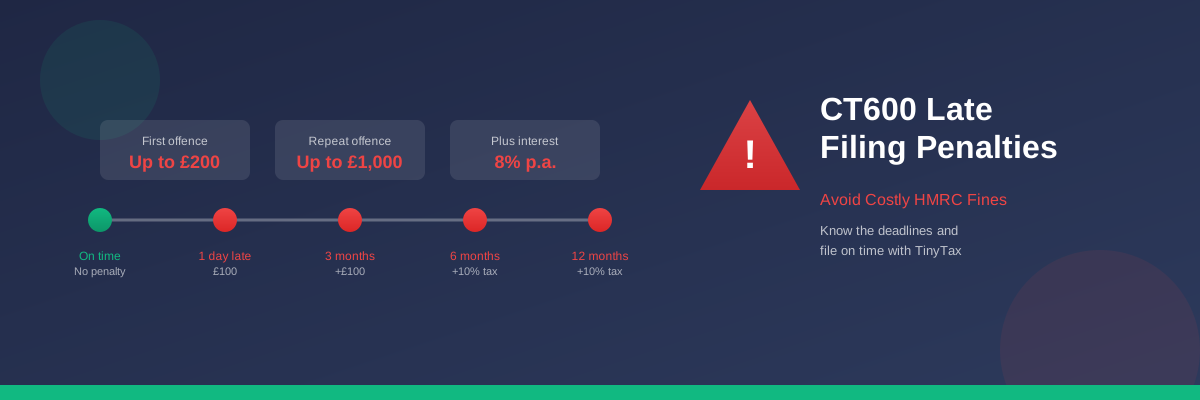
CT600 Late Filing Penalties: What You Need to Know
Missing your CT600 deadline can be costly. HMRC charges automatic penalties for late corporation tax returns, and these increase the longer you delay.
Here is everything you need to know about CT600 late filing penalties and how to avoid them.
The CT600 Filing Deadline
Your company must file its CT600 corporation tax return within 12 months of the end of your accounting period.
For example:
- Accounting period ends: 31 March 2025
- CT600 deadline: 31 March 2026
Late Filing Penalty Structure
First Offence Penalties
| How Late | Penalty |
|---|---|
| 1 day late | £100 (immediate) |
| 3 months late | Additional £100 |
| 6 months late | HMRC estimates tax + 10% penalty |
| 12 months late | Further 10% penalty on estimated tax |
But if you owe corporation tax, the 6-month and 12-month penalties are based on your unpaid tax, which can be substantial.
Repeat Offence Penalties
If you file late for a third time within a rolling period, the penalties increase:
| How Late | Penalty |
|---|---|
| 1 day late | £500 (immediate) |
| 3 months late | Additional £500 |
Late Payment Interest
Separate from filing penalties, HMRC charges interest on any corporation tax paid late.
Current interest rate (2025): 8% per annum
This was increased in April 2025 from the Bank of England base rate plus 2.5% to base rate plus 4%.
Interest is calculated daily from your payment deadline (9 months and 1 day after period end) until payment is received.
Example Interest Calculation
If you owe £10,000 in corporation tax and pay 6 months late:
- Interest rate: 8% per year
- 6 months interest: £10,000 x 8% x 0.5 = £400
How HMRC Estimates Your Tax
If you have not filed after 6 months, HMRC can estimate your corporation tax liability. They base this on:
- Previous years returns
- Information from your accounts filed at Companies House
- Industry averages
Are Penalties Tax Deductible?
No. HMRC penalties are not an allowable expense for corporation tax purposes.
You must still record them in your accounts, but they will be added back when calculating your taxable profit. This means penalties cost your company the full amount with no tax relief.
How to Appeal a Penalty
You can appeal a CT600 penalty if you have a reasonable excuse for filing late. HMRC accepts excuses such as:
- Serious illness
- Death of a close family member
- Fire, flood, or theft affecting business records
- HMRC service issues preventing submission
- Relying on someone else to file
- Forgetting the deadline
- Too busy with other work
- Finding the process confusing
Avoiding Late Filing Penalties
1. Know Your Deadlines
As soon as your accounting period ends, note these dates:
- 9 months + 1 day: Corporation tax payment due
- 12 months: CT600 filing deadline
2. File Early
There is no benefit to waiting until the deadline. Filing early gives you:
- Time to correct any errors
- No risk of technical issues on deadline day
- Peace of mind
3. Use Reliable Software
HMRC-authorised software like TinyTax ensures your CT600 is submitted correctly and provides confirmation of receipt.
4. Set Up Reminders
Create calendar reminders at:
- 3 months before deadline
- 1 month before deadline
- 1 week before deadline
5. Even for Dormant Companies
Dormant companies with no trading activity still need to file a CT600 (or CT600A for a dormant company exemption). The same penalties apply.
What If You Cannot Pay?
If you can file on time but cannot pay the tax owed, always file anyway.
Filing on time avoids the late filing penalties entirely. You will still face interest on the late payment, but this is significantly less than filing penalties plus interest.
You can also contact HMRC to arrange a Time to Pay agreement, spreading your payment over several months without enforcement action.
Key Dates to Remember
| Event | Deadline |
|---|---|
| Accounting period ends | Your year end date |
| Corporation tax payment | 9 months + 1 day after period end |
| CT600 filing | 12 months after period end |
| First penalty | Day 1 after deadline |
| Second penalty | 3 months after deadline |
| Tax-based penalty | 6 months after deadline |
| Further penalty | 12 months after deadline |
Summary
CT600 late filing penalties start at £100 and escalate quickly. After 6 months, HMRC can estimate your tax and charge 10% on top. Repeat offenders face £500 fixed penalties.
The simplest solution is to file on time. Use TinyTax to prepare and submit your CT600 well before your deadline, and avoid these costly penalties entirely.