CT600 for Dormant Companies: Do You Need to File?
Many directors assume dormant companies do not need to file corporation tax returns. This is often incorrect. Most dormant companies still need to file a CT600 with HMRC.
Here is how to determine your obligations and file correctly.
HMRC vs Companies House Dormancy
Important: HMRC and Companies House define dormancy differently.
Companies House Definition
A company is dormant if it has no significant accounting transactions (no trading, no bank interest, no expenses).
HMRC Definition
HMRC considers a company dormant only if it:
- Is not carrying on business
- Has no income
- Has no chargeable gains
- Does not claim any reliefs or allowances
When You MUST File CT600
You must file a CT600 if your dormant company:
- Is registered for Corporation Tax with HMRC
- Receives a notice to deliver a return (CT603)
- Has any income (including bank interest)
- Has assets that could generate chargeable gains
- Is claiming any tax reliefs
When You May Not Need CT600
You might avoid CT600 filing if:
- Never registered for Corporation Tax - Brand new companies that have never traded may not be registered
- Told HMRC you are dormant - HMRC may agree not to issue returns
- Company is being struck off - Final returns may not be required
Filing a Nil CT600 Return
A dormant company CT600 is straightforward:
Key Box Entries
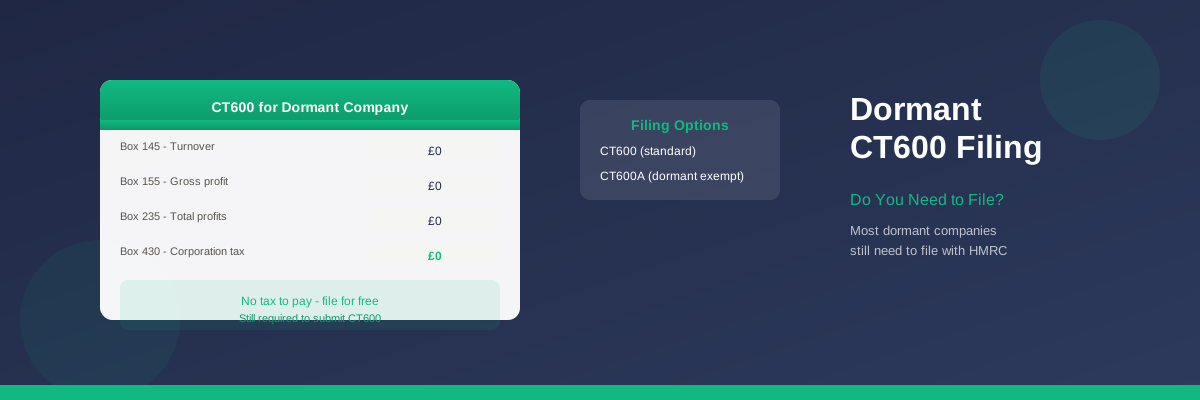
| Box | Description | Value |
|---|---|---|
| 145 | Turnover | £0 |
| 155 | Gross profit | £0 |
| 235 | Total profits | £0 |
| 430 | Corporation tax | £0 |
How to File
Option 1: TinyTax (Free for Dormant)
TinyTax allows dormant companies to file CT600 for free:
- Add your dormant company
- Select the dormant/nil return option
- Confirm the accounting period
- Submit directly to HMRC
Option 2: HMRC Online Service
HMRC provides free CT600 filing (until March 2026):
- Log in to Government Gateway
- Access Corporation Tax service
- Complete the nil return
- Submit
Option 3: Accountant
Using an accountant for a nil return is usually unnecessary expense, but some directors prefer professional assistance.
CT600 vs CT600A
There are two relevant forms:
CT600 (Standard Return)
The full corporation tax return. Even with nil values, this is what most dormant companies file.
CT600A (Dormant Company Exemption)
A simplified form for companies claiming exemption from filing. Only available if:
- Company was dormant for the entire period
- No notice to deliver a return was issued
- Company has no tax liability
Telling HMRC You Are Dormant
If your company becomes dormant, you can notify HMRC:
- Write to your Corporation Tax office
- Explain the company is dormant
- Request they stop issuing notices to file
Filing Deadline
Dormant companies have the same CT600 deadline:
- 12 months after the end of the accounting period
- 1 day late: £100
- 3 months late: additional £100
- Repeat offenders face higher penalties
Common Mistakes
1. Assuming No Filing Needed
The most common mistake is not filing at all. If HMRC expects a return, penalties will follow.
2. Filing Late
Because there is no tax to pay, directors sometimes deprioritise filing. Penalties still apply.
3. Not Notifying HMRC
If you do not tell HMRC your company is dormant, they will keep sending notices and expecting returns.
4. Missing Companies House Filing
Remember: CT600 (HMRC) and annual accounts (Companies House) are separate. You likely need to file both.
What About Previous Years?
If you have unfiled returns from previous years, file them as soon as possible:
- Penalties increase over time
- Interest compounds
- HMRC can estimate your tax liability
When Dormancy Ends
If your company starts trading:
- You must file CT600 for any period with activity
- Register for Corporation Tax if not already registered
- Normal filing requirements apply going forward
Summary
Most dormant companies need to file CT600 returns with HMRC, even with nil values. Key points:
- HMRC dormancy differs from Companies House dormancy
- If you receive a CT603 notice, you must file
- Nil returns still have deadlines and penalties
- Use TinyTax to file dormant CT600 returns for free