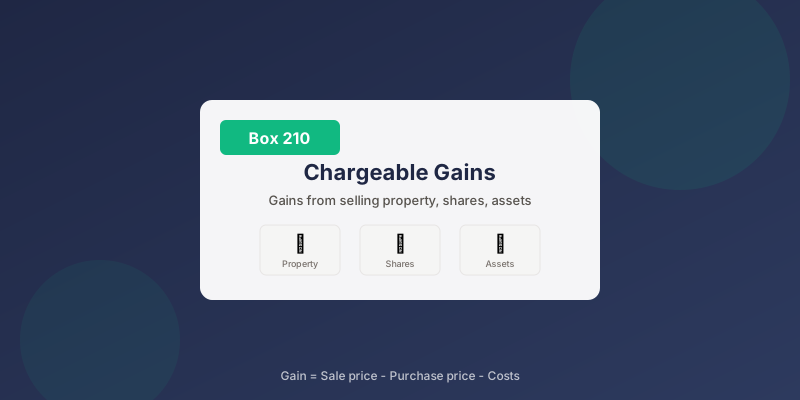
CT600 Box 210: Chargeable Gains Explained
Box 210 on the CT600 captures chargeable gains arising from the disposal of capital assets. This is where you report gains from selling property, shares, or other assets your company owns.
What Goes in Box 210?
Box 210 is for net chargeable gains after deducting allowable losses. This includes gains from disposing of:
- Property and land
- Shares and securities
- Business assets
- Equipment (in certain cases)
- Intellectual property (pre-April 2002)
Understanding Chargeable Gains
What Creates a Chargeable Gain?
A gain arises when your company sells an asset for more than it cost:
``` Chargeable Gain = Sale Proceeds - Original Cost - Allowable Costs ```
Allowable costs include:
- Purchase price
- Legal fees on acquisition
- Improvement costs
- Legal fees on disposal
Example Calculation
| Item | Amount |
|---|---|
| Sale proceeds | £150,000 |
| Less: Purchase price | (£100,000) |
| Less: Legal fees (buy) | (£2,000) |
| Less: Improvements | (£10,000) |
| Less: Legal fees (sell) | (£3,000) |
| Chargeable Gain | £35,000 |
Types of Assets for Box 210
Assets Typically Creating Chargeable Gains
| Asset Type | Box 210? |
|---|---|
| Investment property sold | Yes |
| Shares in other companies sold | Yes |
| Business premises sold | Yes |
| Goodwill (pre-April 2002) | Yes |
| Vehicles sold | Rarely (usually exempt) |
Assets That Don't Go Here
| Asset Type | Treatment |
|---|---|
| Trading stock sold | Trading income (Box 150) |
| Post-2002 intangibles sold | Box 195 |
| Wasting assets (plant, etc.) | Often exempt |
| Shares in subsidiary (SSE) | Often exempt |
Calculating the Net Figure
Box 210 requires the net position:
If Gains Exceed Losses
- Total gains: £50,000
- Less current year losses: (£10,000)
- Less brought forward losses: (£5,000)
- Box 210: £35,000
If Losses Exceed Gains
- Enter zero in Box 210
- Carry forward the excess loss
- Use Box 220 for losses to carry forward
Indexation Allowance
For assets acquired before January 2018:
- Indexation can reduce chargeable gain
- Based on RPI increase from purchase to January 2018 (or earlier sale)
- Cannot create or increase a loss
- Cost in 2010: £100,000
- Indexation factor to Jan 2018: 0.234
- Indexed cost: £123,400
- Sale proceeds: £150,000
- Gain: £26,600 (not £50,000)
The Substantial Shareholding Exemption
Companies selling shares may qualify for SSE:
Conditions for SSE
- Held at least 10% of ordinary shares
- Held for at least 12 months
- Selling company was a trading company
- Company being sold was a trading company
Most Small Companies: Box 210 = Zero
Typical small companies:
- Operate from rented premises
- Don't own investment properties
- Don't sell shares in other companies
- Keep the same assets year to year
Related Boxes
| Box | Description |
|---|---|
| 205 | Other income |
| 210 | Chargeable gains (this box) |
| 215 | Gross profits before deductions |
| 220 | Losses brought forward |
| 235 | Total profits |
Common Questions
My company sold a company car - does that go here?
Normally no. Cars are exempt from capital gains tax. Enter zero unless it was a vintage/classic car held as an investment.
We sold our office building - is that Box 210?
Yes. The gain on selling property (proceeds minus cost and fees) goes in Box 210.
What about shares my company holds?
If you sell shares for a gain:
- Check if SSE applies (often exempt)
- If not exempt, enter gain in Box 210
- Losses can offset other gains
My company received compensation for damaged equipment - where does that go?
Usually not Box 210:
- If it's revenue compensation → Trading income
- If it's capital compensation → May be a chargeable gain
- Often covered by rollover relief
When Using TinyTax
TinyTax handles standard trading company scenarios:
- Most TinyTax users don't have chargeable gains
- If you do have gains, you may need specialist advice
- Complex transactions (property sales, share disposals) often require professional input
Related Articles
Need Help?
TinyTax is designed for standard trading companies. For complex capital gains scenarios involving property sales or share disposals, consider consulting a tax specialist.
Start Your CT600 Free →