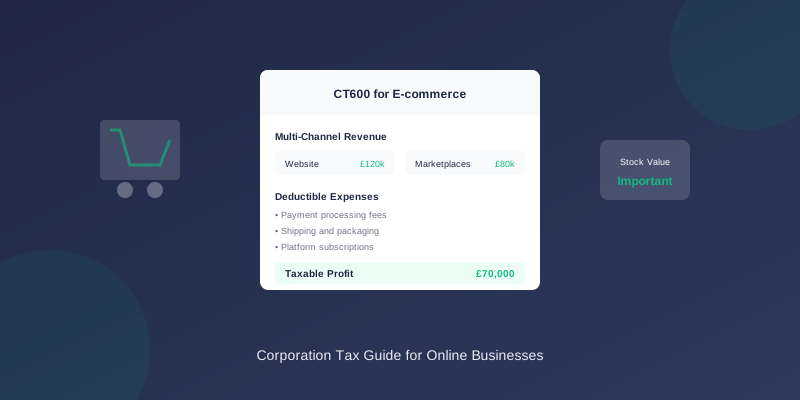
CT600 for E-commerce Businesses: Complete Guide
Running an online shop through a UK limited company? This guide covers everything you need to know about filing your CT600 Corporation Tax return.
E-commerce Tax Basics
As an e-commerce company, you'll pay Corporation Tax on your profits:
| Profit Level | Tax Rate |
|---|---|
| Up to £50,000 | 19% |
| £50,001 - £250,000 | 25% (with marginal relief) |
| Over £250,000 | 25% |
Key Tax Areas for E-commerce
1. Revenue Recognition
Your turnover includes all sales:
- Website sales
- Marketplace sales (Amazon, eBay, Etsy)
- Social media sales
- Wholesale orders
2. Payment Processor Fees
These are all deductible expenses:
| Processor | Typical Fees |
|---|---|
| Stripe | 1.4% + 20p (UK cards) |
| PayPal | 2.9% + 30p |
| Square | 1.75% |
| Shopify Payments | 1.5% - 2% |
3. Stock Valuation
Correctly valuing stock affects your tax bill significantly:
``` Opening stock £30,000 Purchases £200,000 Less: Closing stock (£45,000) Cost of sales £185,000 ```
Value stock at the lower of:
- Cost (what you paid)
- Net realisable value (what you can sell it for)
Calculating Your CT600
Box 145: Turnover
Report all sales revenue:
``` Website sales £280,000 Amazon sales £80,000 Etsy sales £15,000 Wholesale £25,000 Total turnover £400,000 ← Box 145 ```
Box 155: Gross Profit
``` Turnover £400,000 Opening stock £30,000 Purchases £200,000 Closing stock (£45,000) Cost of goods sold £185,000 Gross profit £215,000 ← Box 155 ```
Operating Expenses
Typical e-commerce expenses:
| Category | Example Amount |
|---|---|
| Payment processing | £12,000 |
| Platform fees | £8,000 |
| Shipping/postage | £25,000 |
| Packaging | £8,000 |
| Marketing | £20,000 |
| Web hosting | £2,000 |
| Software subscriptions | £5,000 |
| Staff costs | £40,000 |
| Warehouse/storage | £15,000 |
| Other | £10,000 |
| Total expenses | £145,000 |
Box 165: Trading Profit
``` Gross profit £215,000 Less: Expenses (£145,000) Trading profit £70,000 ← Box 165 ```
E-commerce Specific Expenses
Fully Deductible
Platform and Processing:
- Shopify/WooCommerce subscriptions
- Payment gateway fees
- Marketplace fees
- SSL certificates
- Domain registration
- Shipping costs
- Packaging materials
- Warehouse rent
- Pick and pack services
- Returns processing
- Google/Facebook ads
- Influencer payments
- Email marketing tools
- SEO services
- Photography
- Web hosting
- Inventory management software
- Accounting software
- Customer service tools
- Analytics subscriptions
Capital Allowances
Equipment purchases get tax relief:
| Asset | Allowance |
|---|---|
| Computers | 100% AIA |
| Camera equipment | 100% AIA |
| Warehouse equipment | 100% AIA |
| Delivery van | 100% AIA |
Multi-Channel Selling
If you sell across multiple channels:
``` Own website 40% of sales Amazon 35% of sales eBay 15% of sales Etsy 10% of sales ```
All channels are combined for:
- Total turnover (Box 145)
- Total cost of sales
- Corporation Tax calculation
Drop Shipping Businesses
Drop shipping has specific considerations:
Revenue: Full sale price (what customer paid) Cost of sales: Supplier price (what you paid them)
Even though you never handle stock, record keeping is the same:
- Customer order = Sale
- Supplier payment = Purchase
Digital Products
Selling digital products (ebooks, courses, software):
Advantages:
- No stock valuation needed
- No shipping costs
- Higher margins typically
- Hosting costs still apply
- Platform fees still apply
- May have VAT complications for EU sales
VAT and E-commerce
VAT is separate from Corporation Tax but affects your figures:
If VAT registered (threshold £90,000):
- Report turnover excluding VAT
- Report expenses excluding VAT
- VAT on purchases reclaimed separately
- EU sales may require VAT OSS registration
- US sales have sales tax considerations
- Track by destination for compliance
Example: Complete E-commerce CT600
XYZ Online Ltd - Fashion Retailer
Year ended 31 March 2025
| Description | Amount |
|---|---|
| Website sales | £180,000 |
| Amazon sales | £45,000 |
| Other sales | £25,000 |
| Total turnover | £250,000 |
| Cost of goods sold | £100,000 |
| Gross profit | £150,000 |
| Payment fees | £7,500 |
| Shipping | £18,000 |
| Packaging | £5,000 |
| Marketing | £25,000 |
| Platforms | £6,000 |
| Other expenses | £18,500 |
| Total expenses | £80,000 |
| Net profit | £70,000 |
Record Keeping Requirements
Essential records to maintain:
- Sales data - All platforms and channels
- Purchase invoices - Every stock purchase
- Stock counts - Opening and closing
- Bank statements - All transactions
- Payment processor statements - Monthly downloads
- Expense receipts - Everything you claim
Common Mistakes
1. Ignoring Stock at Year End
Wrong: Assuming stock is zero Right: Count and value all inventory (including in transit)
2. Using Net Sales
Wrong: Using PayPal payout as turnover Right: Use gross sales, fees are separate expenses
3. Missing Platform Fees
Wrong: Not claiming all marketplace fees Right: Track and claim all platform costs
4. No Expense Categorisation
Wrong: Lumping all costs together Right: Categorise expenses for accounts
When Using TinyTax
TinyTax helps e-commerce businesses:
- Import trial balance from accounting software
- Correct categorisation of income streams
- Stock adjustment handling
- Payment fees properly allocated
Related Articles
- CT600 for Amazon Sellers: Complete Guide
- CT600 Boxes Explained: Understanding Every Field
- How to File a CT600 Online: Step-by-Step Guide
Need Help?
E-commerce businesses have specific tax considerations. TinyTax guides you through the CT600 process, ensuring all sales and expenses are correctly reported.
Start Your CT600 Free →